Student broadband deals, prices and availability
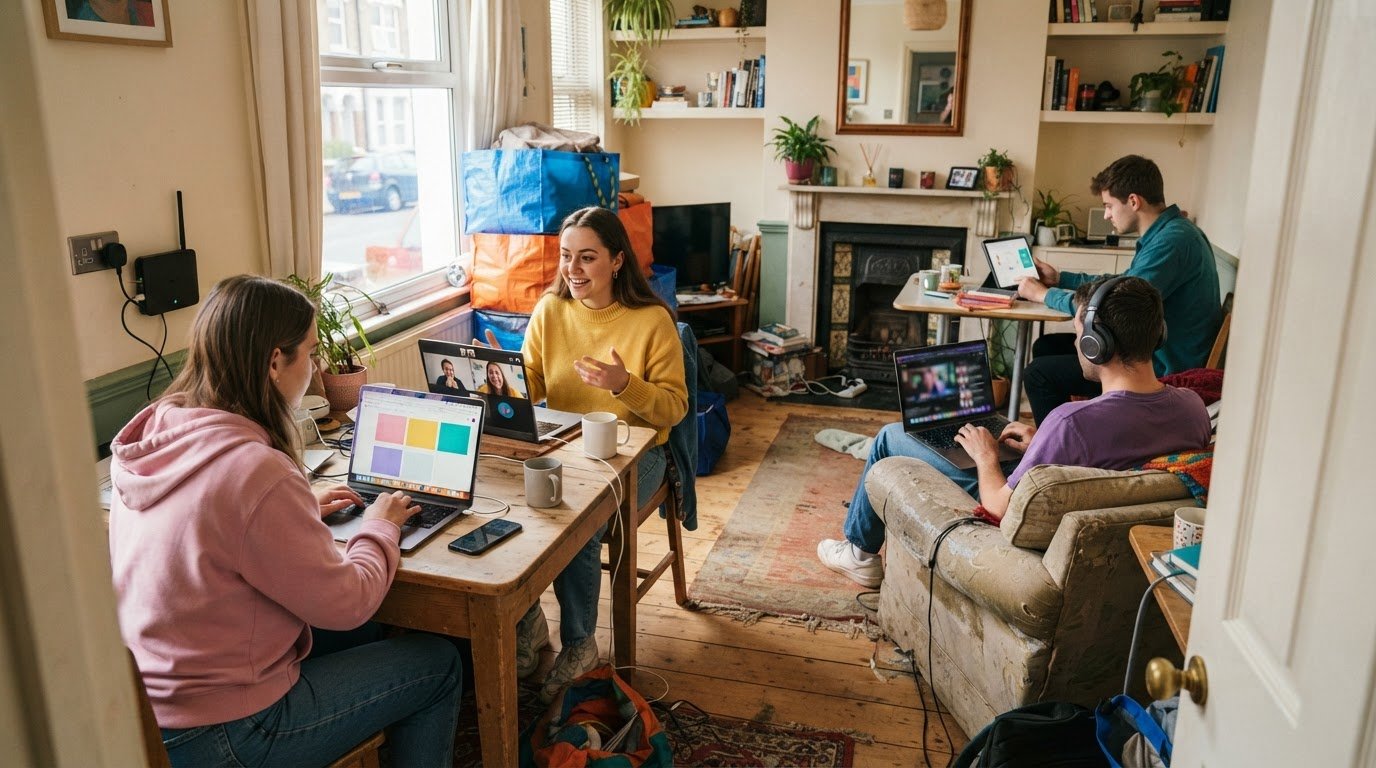
The best student broadband depends on how many people share your home and what you do online. For one person using email and browsing, 20-50 Mbps is suitable; a shared house with four or more people streaming and making video calls at the same time may need 150-500 Mbps. Student broadband deals can cover different speeds and contract lengths, so the shortest option isn’t automatically the best value.
Before choosing student broadband deals, weigh up the monthly cost, contract term and connection available at your student address. Nine-month contracts have sometimes appeared between July and September, but have been uncommon in recent years.
This guide explains how to match broadband speed to your household, compare packages and bundles, and check availability by postcode. You’ll also learn what to consider if you need a shorter contract, so you can choose an option that fits your term dates and living arrangements.
Key Takeaways
- Match broadband speed to the number of people sharing your home and the way you use the internet.
- Compare contract length and package features alongside monthly cost to see which option best fits your budget.
- Use your student address to explore which broadband technologies and deals are available at your postcode.
- Nine-month contracts have been uncommon in recent years; weigh up a shorter term against the flexibility of a 12-month option.
What broadband is best for students?
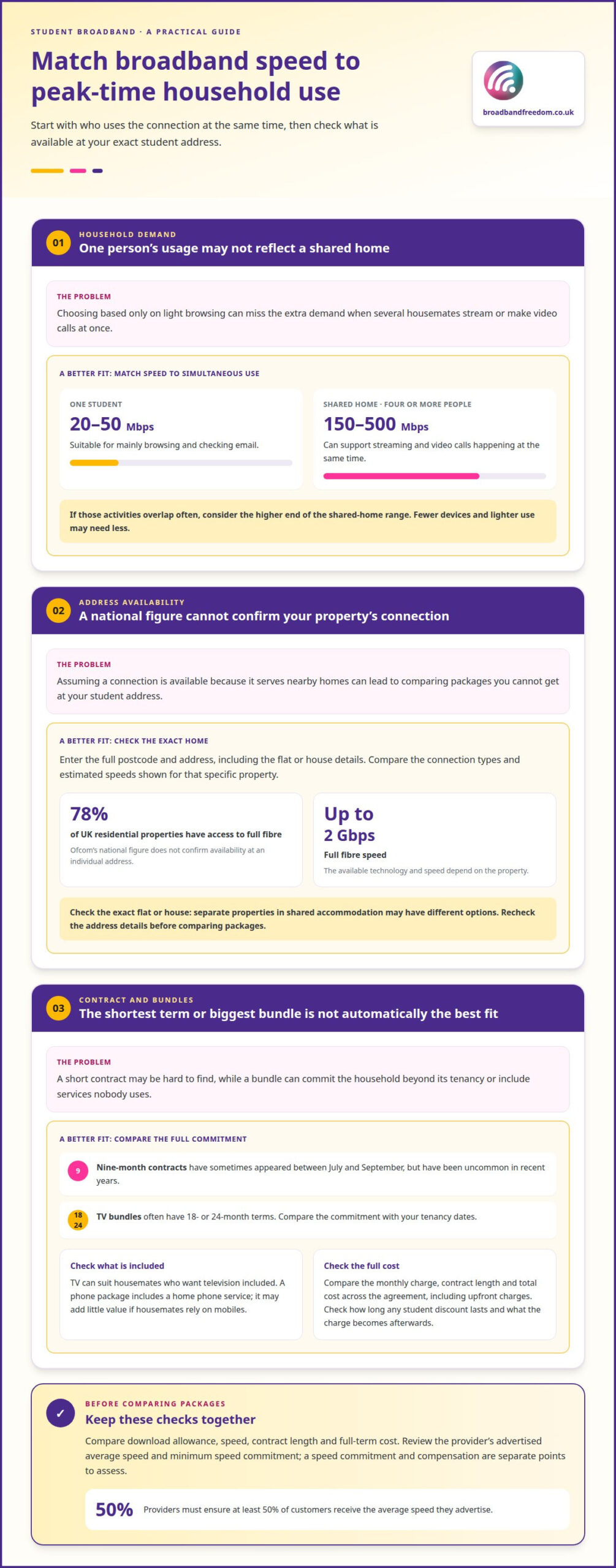
Choose speeds around your household’s needs: one person may need 20-50 Mbps, while a busy shared home may need 150-500 Mbps. Compare download speed with how many people stream, browse and make video calls at once.
Choosing speeds for household size and usage
Start with the number of people using the connection at peak times, not just the number on the tenancy. A solo student mainly browsing and checking email can consider 20-50 Mbps; regular video calls or streaming add demand. For a student broadband deal, match the broadband plan to simultaneous use, rather than paying for speeds your household won’t use.
Broadband speeds for shared student homes
In a shared house, several devices may compete for capacity during evening study or streaming. A 150-500 Mbps connection can support four or more people streaming and making video calls simultaneously. Choose towards the higher end if those activities overlap often; lighter use across fewer devices may need less. Count housemates and peak-time activities before choosing.
Broadband types, fibre speeds and costs
Standard broadband, fibre and full fibre are different options to compare at your address. Full fibre can deliver speeds of up to 2 Gbps, but the available technology and speed depend on the property. Compare the monthly charge against the download speed and contract length, then consider the total cost across the agreement. A student discount may affect the deal’s value, so include its terms in your comparison.
Comparing total contract costs and customer service
How do students compare speed, total contract cost and customer service? According to the UK Government, compare cost, contract length, download allowance and speed; calculate the full-term cost, including any upfront charges. Then review the provider’s advertised average speed and minimum speed commitment. Providers must ensure at least 50% of customers receive the average speed they advertise.
For service, compare the support channels and complaint process described in each plan’s terms. Check what remedy applies if service falls below a stated minimum speed; a speed commitment and compensation are separate points to assess. You can compare broadband deals by the criteria that matter to your household.
Broadband prices and bundles
Look beyond the monthly charge to understand what a bundle adds. Broadband and TV can suit housemates who want television included, while a phone package includes a home phone service. TV bundles often have 18- or 24-month contract terms, so compare the commitment with your tenancy dates before choosing.
For online lectures, gaming and everyday browsing, focus on how your household will use the connection. If housemates rely on mobile phones for calls, a landline bundle may add little value. If nobody watches the included TV, a broadband-only option may suit you better.
Check discounts and package terms
Read the offer terms to see how long a student discount lasts and what the charge becomes afterwards. Note whether included services remain part of the package throughout the agreement. Ofcom’s broadband and phone guidance can help you understand what to consider when comparing packages.
Before deciding, write down what each bundle includes and which services your household will actually use. Citizens Advice explains what to look for in phone, internet and TV services. This can help you spot when an extra service adds practical value, rather than choosing a bundle for features your student house won’t use.
Checking service availability by postcode
Enter the student home’s full postcode and address into a broadband availability checker. The postcode narrows the search, while the building details identify the connection options for that property. Check the exact flat or house, especially in shared accommodation, where separate flats can have different services available.
Check the specific student address
Start with the address where broadband will be installed, not a nearby campus or your previous home. Compare the broadband types, speeds and contract options available at that property. A faster package elsewhere on the same street won’t help if it isn’t available at your student home.
Ofcom says 78% of UK residential properties have access to full fibre broadband. That national figure doesn’t tell you whether a particular student address can receive it. Use the exact address to see whether fibre broadband or another connection type appears in the available options.
Match availability to your household
Once the results appear, compare the estimated speed for each package with your household’s needs. For example, several housemates streaming at once may benefit from a faster connection more than a student who mainly browses. Check the estimate for the specific package you’re considering, rather than assuming every option at the address performs alike.
Availability also affects your bundle choices. If several connection types are listed for the student home, compare the packages available for each before deciding. Check whether a bundle includes services you’ll use, and consider how its contract fits your tenancy dates.
Plan installation around your move
Check availability before moving day, then compare the installation arrangements and contract start details for the offers you’re considering. Some fixed-line services may involve an engineer visit, so review the appointment information provided during the order. If installation requires someone at home, coordinate access with your housemates or landlord.
Keep the exact address details handy when comparing results. A typo in the flat number or postcode can return options for the wrong property, making speed and bundle comparisons misleading. Recheck the details before choosing a plan.
Which student broadband deals offer short 9- or 12-month contracts?
Nine-month student broadband contracts have sometimes appeared between July and September, but have been uncommon in recent years. Twelve-month contracts run three months longer, so the better fit depends on when you’ll leave your student home. Student broadband deals with shorter terms can suit you if you won’t stay in university accommodation over summer.
Check when short contracts appear
Student broadband deals usually become available in the summer before the academic year starts. If you’re looking for a nine-month term, compare options during this period and read the start and end dates carefully. Student offers usually require an ac.uk email address for activation, so have it ready when applying.
A twelve-month contract may make more sense if you’ll keep your accommodation through summer. It covers three additional months compared with a nine-month term, which may avoid arranging another connection after the academic year. Match the contract dates to your tenancy, including any agreed extension.
Compare term length with flexibility
Look at the entire commitment, not only the time you expect to be studying. Review the contract length, download allowance, speed and total cost together. If your plans change, cancellation may require 30 days’ notice. Note the notice period and end date, then plan ahead to avoid overlooking the time needed to give notice.
For a shared student home, agree who will manage the account and when the household expects to move out. This makes it easier to choose between a shorter contract and a twelve-month term, particularly if housemates have different tenancy dates.
Plan the connection around moving day
Arrange broadband in advance to reduce the chance of being without Wi-Fi after you move in. Set the start date around your arrival and allow time for the connection process. This is especially useful if lectures or online study begin soon after you move.
Compare broadband deals by contract term and choose an option that fits your accommodation dates.
Broadband Freedom: Full Fibre Broadband Deals
Broadband Freedom helps you compare broadband options against your student home’s needs and available connection types. You can compare Full Fibre Broadband Deals, Fibre Broadband Deals and Standard Broadband Deals, as well as Broadband and Phone Packages.
If full fibre is available at your address, compare its estimated speed and contract terms with other suitable options. If it isn’t, fibre or standard broadband may better suit your household. Before deciding, consider how many people will use the connection, your contract dates and whether a phone package would be useful.
Use Broadband Freedom when you’re ready to compare providers and narrow down a broadband option that suits your circumstances. Contact Broadband Freedom to discuss your comparison.
Make your next broadband choice with confidence
Before choosing, agree with your housemates who will manage the account and how you’ll share the bill. A clear arrangement helps avoid confusion if someone moves out or the household changes. Keep the decision focused on your shared priorities, so the student broadband deal works for everyone who’ll use it.
Turn your research into a shortlist by focusing on options that fit your address and household. Compare their terms side by side before committing. Broadband Freedom lets you compare Full Fibre Broadband Deals, Fibre Broadband Deals and Standard Broadband Deals.
Compare broadband deals and take the next step towards a setup that suits your student home. A thoughtful choice now can make settling in easier.
Frequently Asked Questions
How can I find out what broadband speed I could get?
Use an availability checker with your full address, including the flat number, to see the estimated speed for your property. Compare the estimate for each package rather than relying on a result for the whole postcode. For video calls, consider upload speed as well as download speed. For online gaming, a stable connection and quick response can matter alongside download performance.
How long will my student discount last?
The offer’s terms explain how long any discount applies. Check whether it reduces each monthly bill or is applied another way, and note when it ends. Then budget for the charge after the discount period. If you share costs with housemates, agree how to divide the bill if the amount changes during your tenancy.
What are the best student broadband deals in the UK for 2026?
Choose an option that fits your address, household needs and accommodation dates. Compare the available package terms, then decide whether broadband alone or a bundle suits your household. For example, housemates who regularly watch television together may value an included TV service, while others may prefer a simpler package. The best fit depends on what you’ll use.
How much does student broadband cost per month in the UK?
The monthly charge depends on the package available at your address, its contract and included services. Check the full agreement, including any introductory offer and the charge afterwards. If you share with housemates, agree how you’ll divide the bill and manage payments. This gives everyone a clearer picture of their contribution throughout the contract.
What broadband speeds do students need for streaming, gaming, and video calls?
Choose a package based on what people in your home will do online at the same time. Streaming video, joining calls and downloading large files can all use connection capacity. Gaming also depends on a stable connection and quick response, not just download performance. If you share, consider busy evenings when several people may be online together.
Are there setup fees, router costs, price rises, or other hidden costs in student broadband deals?
Review each offer for installation charges, router costs, introductory pricing and terms for changes during the contract. These details can vary between packages, so read the information before ordering. Check cancellation conditions and whether included extras remain part of the package throughout the agreement. This helps you budget beyond the first bill.

Article by
Elaine Lang
Elaine has over 20 years across Marketing, Communications and Public Relations in the UK. She has worked across large UK corporations, including Commercial Banks and Airports, to online consumer finance and technology solutions. Elaine has post graduate qualifications in Marketing from the Chartered Institute of Marketing (CIM) and the Industry of Direct Marketing (IDM). She is a lifelong feline fan, sharing her home with around 4-6 cats for many years. This of course can be a challenge when trying to work at home, as they like to try to help!